Tech Stack Integration
Connect Bullhorn with the systems that support recruitment delivery.
Most recruitment agencies operate with a growing set of tools around their CRM. Sourcing platforms, automation tools, messaging systems, reporting platforms and finance systems all play a role in how recruitment work actually happens.
Tech stack integration focuses on ensuring the systems around Bullhorn work together cleanly and support the way the business actually operates.
The Problems We See Repeatedly
When integrations are not structured properly, similar issues tend to appear across the recruitment tech stack.
Common signs the stack needs attention:
- Recruiters copying information between systems
- Important activity happening outside the CRM
- Candidate or client data duplicated across platforms
- Automation tools introduced without clear workflows
- Outreach activity disconnected from the CRM
- Finance or contractor systems operating separately from recruitment delivery
In most cases the problem is not the tools themselves.
It is that systems were introduced over time without a clear integration structure.
Where Most Agencies Sit
Most Bullhorn environments which have 3rd party integrations fall into one of three situations.
1. Recruiters are doing the work twice
Information is entered into Bullhorn, then copied into another tool because the integration does not handle the process properly.
2. The tech stack creates more admin, not less
The tools were bought to save time. Instead, consultants are switching between systems, filling gaps and working around them.
3. Nobody can see the complete picture
Data sits across different platforms, reporting is fragmented, and leadership cannot see what is actually driving activity, pipeline or revenue.
In each case the outcome is the same: the technology exists, but it isn’t operating as cleanly or consistently as it should.
What Tech Stack Integration Actually Involves
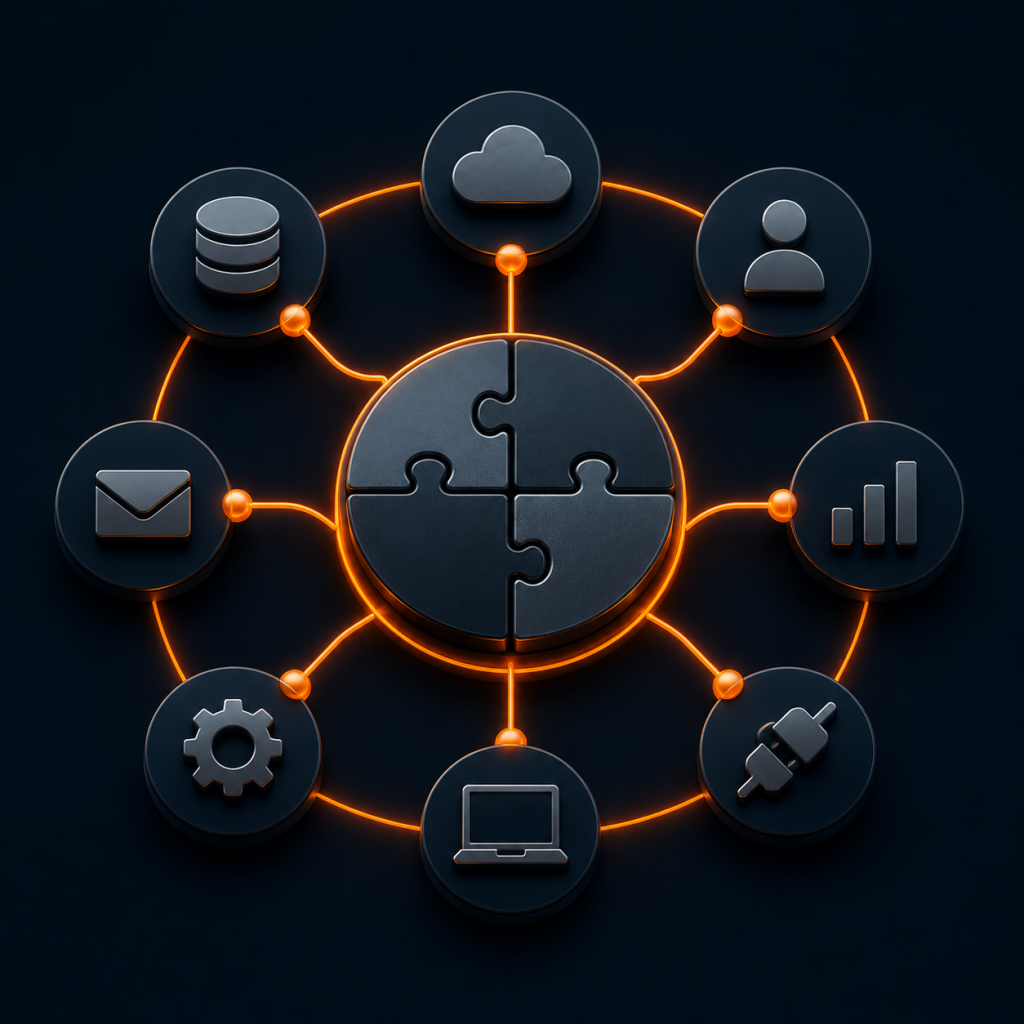
Tech stack integration focuses on connecting Bullhorn with the systems that support recruitment delivery so the technology environment operates as one connected system.
This typically involves work across several key areas of the Bullhorn environment:
Automation Platforms
Connecting automation tools to Bullhorn so actions such as record updates, candidate status changes, data enrichment, follow-up tasks and reminders can happen automatically.
Pay & Bill Systems
Integrating platforms so placement data, contractor records, rate changes, timesheets and invoicing information flow cleanly between recruitment and finance operations.
Messaging & Communication
Capturing communication activity from email, SMS, WhatsApp and telephony systems so conversations remain visible alongside candidate and client records.
Candidate Sourcing & Enrichment
Connecting sourcing and enrichment tools so candidate data flows directly into Bullhorn rather than requiring manual entry.
Outreach & Business Development
Integrating sales and outreach platforms so prospect engagement, follow-up activity and lead tracking remain visible.
Reporting & Data Visibility
Ensuring reporting tools can access clean CRM data so performance can be analysed without manual exports or fragmented datasets.
Across all integration work the focus is always on:
- Reducing manual work between systems
- Improving data consistency across platforms
- Ensuring consultants operate inside one connected environment
- Preventing unnecessary tool overlap
Integration should simplify the stack, not make it more complex.
What Changes as a Result
When the recruitment tech stack is properly integrated:
Recruiters spend less time copying information between systems
➜ Data flows automatically between platforms rather than requiring manual updates.
Candidate and client data becomes more consistent
➜ Information is captured once and shared across the stack.
Automation removes repetitive admin tasks
➜ Processes run reliably without constant manual intervention.
Communication and outreach activity remain visible in the CRM
➜ Conversations and engagement history stay connected to candidate and client records.
The entire system environment becomes easier to manage
➜ Instead of disconnected tools, the tech stack becomes a single operational system.
Who This Is For
Tech stack integration is valuable for recruitment agencies using multiple systems that are not currently working together as well as they should.
It is typically useful when:
- Recruiters regularly move information between tools manually
- Different systems hold different versions of the same data
- Automation tools exist but are not fully utilised
- Outreach or communication activity sits outside the CRM
- The technology stack has grown without a clear structure
You do not necessarily need more tools.
You need the tools you already use to work together properly.
The First Step
Integration problems rarely appear as “integration problems”.
They show up as duplicated data, manual work between systems and tools that don’t quite work together.
That’s why this work usually begins with an Axium Audit.
The audit reviews the systems currently in use, how they connect to Bullhorn and where integration could remove manual work or improve data consistency.
Is your Bullhorn setup working the way it should?
If not, the first step is a short conversation to review your current system and see whether an Axium Audit makes sense.