
Workflow & Process Design
Design recruitment workflows that reflect how the business actually operates.
Recruitment processes drift. Stages multiply, standards slip and consultants work around the system.
Workflow & Process Design aligns Bullhorn and your wider stack with how the business actually delivers.
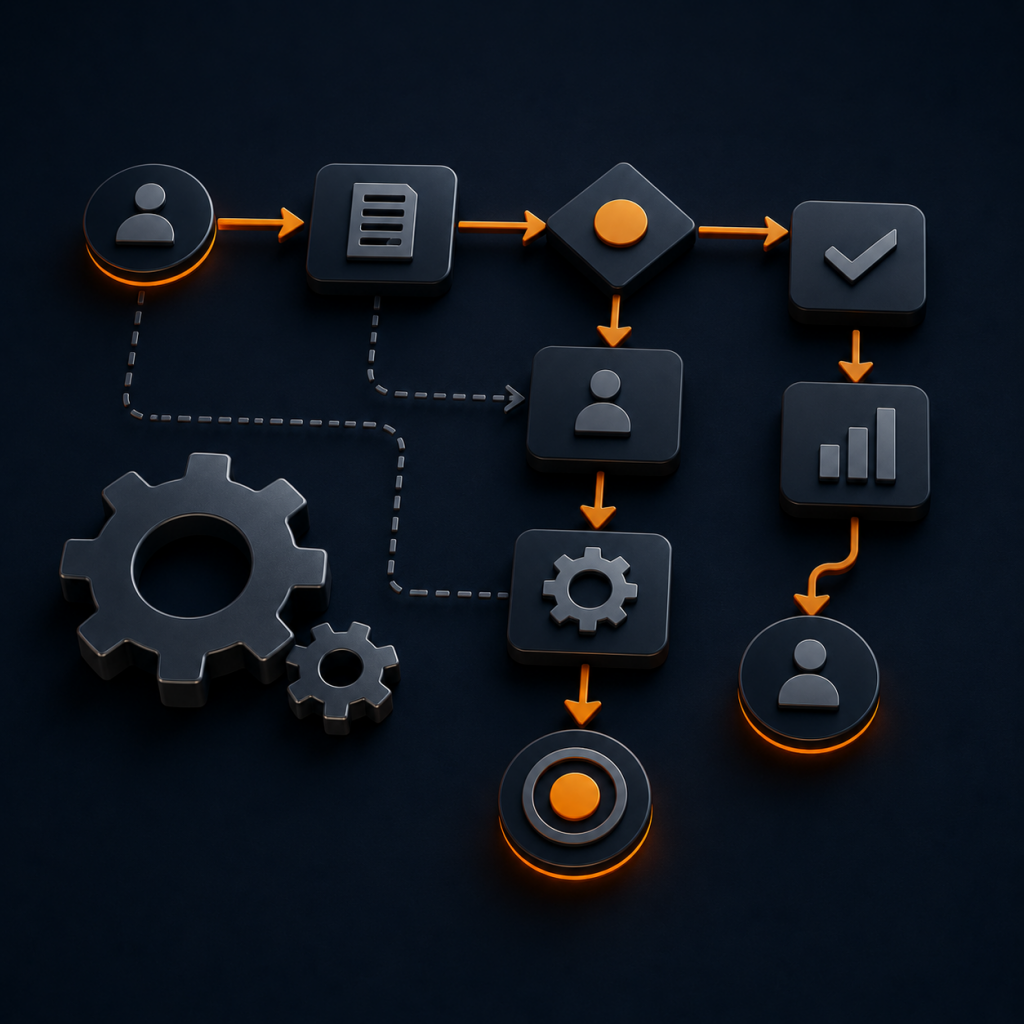
The Problems We See Repeatedly
Workflow challenges tend to appear when systems have evolved gradually as the team grows.
Processes are added to solve immediate problems, but the overall workflow structure is rarely reviewed as a whole.
Common signs workflow design needs attention:
- Job pipelines that do not reflect how roles are actually worked
- Candidate stages used inconsistently across the team
- Consultants skipping stages or updating records after the fact
- Different teams following different processes
- Workflows becoming increasingly complex over time
- Recruitment activity happening outside the CRM
In most cases the issue is not the system itself.
It is that the workflows inside the system no longer reflect how recruitment delivery actually happens.
Where Most Agencies Sit
These are the operational inefficiencies that make recruitment delivery harder than it needs to be.
1.The process live purely in people’s heads
Everyone knows roughly what should happen, but there is no consistent way of doing it across the team.
2. Recruiters or teams all work differently
The same job, candidate or client process is handled differently depending on who owns it.
3. Important steps get missed frequently
Follow-ups, qualification, compliance and handovers rely on memory rather than a structured process.
In each case the outcome is the same: your recruiters are being less efficient and generating less revenue than they could be.
What Workflow & Process Design Actually Involves
Workflow & Process Design focuses on ensuring the system supports recruitment delivery rather than simply recording activity.
The objective is to create clear, practical workflows that consultants can follow naturally.
Pipeline Structure
Designing candidate and job pipelines that reflect how recruitment activity progresses from sourcing through to placement.
Stage Definition
Ensuring each stage within the pipeline has a clear purpose so consultants understand when and how records should move forward.
Process Alignment
Aligning CRM workflows with how consultants actually manage candidates, roles and client relationships.
Workflow Simplification
Removing unnecessary stages or processes that add unnecessary steps to daily recruitment activity.
Operational Consistency
Ensuring workflows are used consistently across teams so the system produces reliable operational data.
Automate the ‘Automatable’
Process steps that do not need manual intervention should be automated, enabling your team to be more productive.
Across all workflow design work the focus is always on:
- Making processes clear and easy for consultants to follow
- Ensuring the system reflects real recruitment behaviour
- Reducing unnecessary complexity
- Creating workflows that scale as the business grows
Good workflow design does not force recruiters to change how they work.
It ensures the system supports the way recruitment already happens.
What Changes as a Result
When workflows are designed properly:
Consultants move candidates and roles through the system more naturally
➜ Processes reflect real recruitment activity.
Pipeline data becomes more reliable
➜ Roles and candidates progress through clearly defined stages.
Recruitment delivery becomes easier to manage
➜ Leadership can see where activity is progressing or slowing down.
System usage becomes more consistent across the team
➜ Workflows provide a shared structure for recruitment delivery.
Instead of fighting the system, consultants begin using it as part of their daily workflow.
Who This Is For
Workflow & Process Design is valuable for recruitment agencies whose systems no longer reflect how the team actually works.
It is typically useful when:
- Pipelines have become overly complex
- Consultants use stages inconsistently
- Recruitment activity often happens outside the CRM
- Processes vary across teams
- Leadership wants clearer operational visibility
You do not need more process.
You need the right processes built into the system you already use.
The First Step
Workflow problems rarely start with the workflow diagrams themselves.
They appear when systems, processes and recruiter behaviour have drifted out of alignment.
That is why this work often begins with an Axium Audit.
The audit reviews how recruitment activity currently moves through the business and identifies where workflow design could simplify delivery and improve system consistency.
Is your Bullhorn setup working the way it should?
If not, the first step is a short conversation to review your current system and see whether an Axium Audit makes sense.